
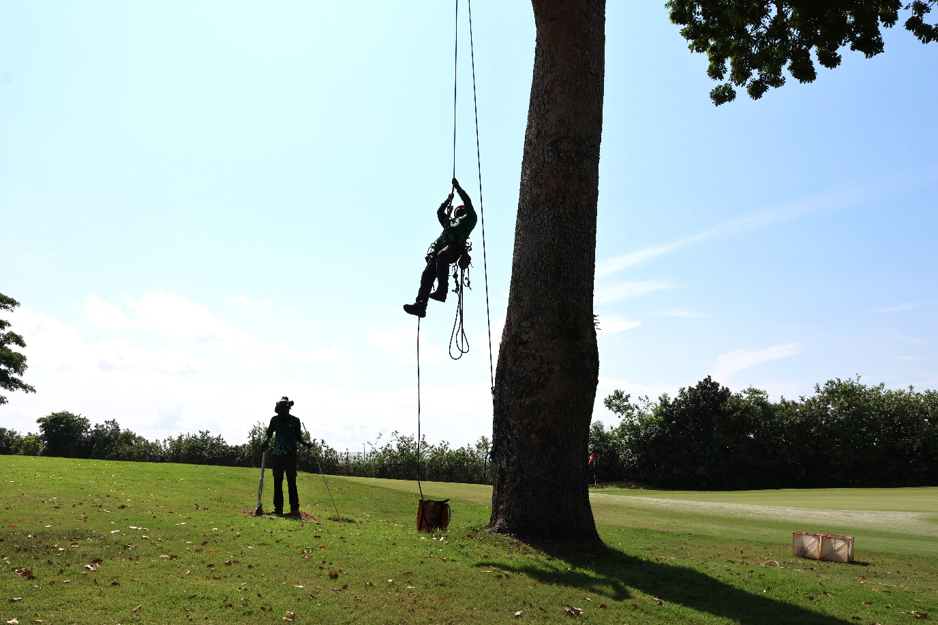
Spend a round on TMCC’s Garden Course or Tampines Course and one thing quickly becomes apparent. The trees are every bit as much a part of the golf course as its greens, bunkers and fairways. Some frame a tee shot, others guard the corner of a dogleg or provide a backdrop to the green. Many simply offer welcome shade beneath their broad canopies. They are as much a part of the Club’s identity as its immaculate and pristine greens.
Yet despite their size and resilience, these magnificent trees remain vulnerable to one of Singapore’s most powerful natural forces: lightning.
Singapore experiences one of the highest lightning densities in the world, with thunderstorms occurring throughout the year. While golfers naturally associate lightning with suspended play, its effects on trees often go unnoticed. A strike that lasts only a fraction of a second can leave damage that continues to develop long after the skies have cleared.
As part of its ongoing commitment to Member safety and responsible environmental stewardship, TMCC has installed Lightning Protection Systems (LPS) on selected trees across both the Garden Course and Tampines Course. These trees were carefully chosen for the important role they play in the strategy, character and overall playing experience of the courses, ensuring they continue to shape the game for years to come.
More Than Just Trees
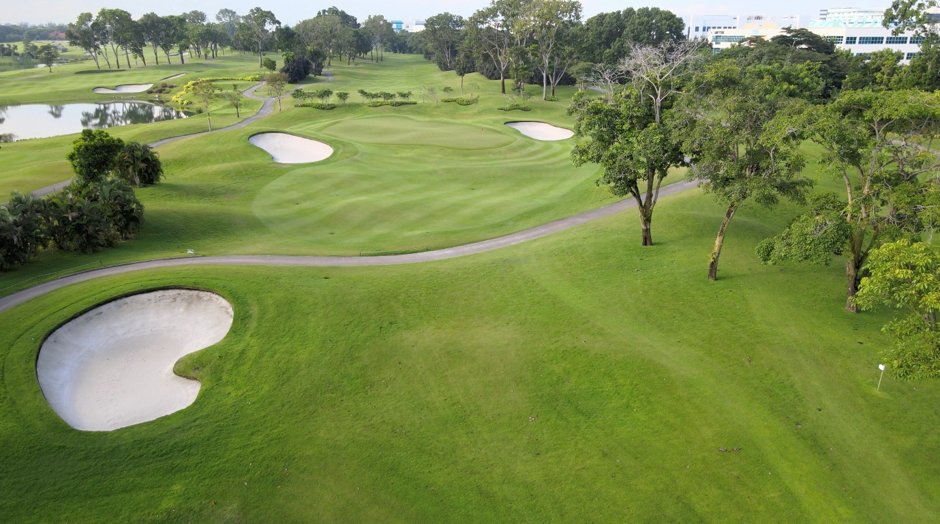
Trees do far more than beautify a golf course.
Some influence strategy by narrowing a landing area or shaping the preferred line of play. Others create visual definition between holes, soften the landscape or provide welcome relief from the tropical sun. Collectively, they give each course its own distinctive identity.
Their ecological value is equally significant.
The canopy supports a diverse range of wildlife, from squirrels and butterflies to countless native insects and birds. During the migratory season, many of these trees become welcome resting places for migratory birds, highlighting the important role the Club’s green spaces play within Singapore’s urban environment.
Beyond supporting biodiversity, trees improve air quality, absorb carbon dioxide and help moderate the local microclimate, creating a cooler and more comfortable environment throughout the golf course.
Whether influencing play or enriching the landscape, every tree contributes to the golfing experience. Protecting those with strategic importance helps preserve the character of the courses while maintaining a safe and enjoyable environment for Members and guests.
The Unseen Challenge
One of the less visible responsibilities of managing a championship golf course is ensuring that its trees remain healthy and structurally sound. While these trees enrich the golfing experience, they also form part of the environment through which Members and guests walk during every round.
A lightning strike can damage a tree’s internal vascular system, weaken its structural fibres and compromise its root system beneath the soil. Trees with extensive root damage often fail to recover, while injured tissues become increasingly susceptible to insect attack, fungal diseases and decay.
The greatest concern is that much of this damage remains hidden. Structural weaknesses may only become apparent months or even years after a strike, increasing the likelihood of weakened limbs, branch failure or, in severe cases, the collapse of an entire tree.
For TMCC, protecting strategically important trees is about more than preserving the landscape. Healthy, structurally sound trees contribute to a safer golfing environment by reducing the risk of branch or tree failure following a lightning strike, reflecting the Club’s commitment to safeguarding both its pristine golf courses and the golfers who enjoy them.
Engineering Meets Arboriculture
Despite its name, a Tree Lightning Protection System does not prevent lightning from striking a tree.
Instead, it provides a controlled pathway for electrical energy to travel safely into the ground.
Should a protected tree be struck, the system intercepts the electrical discharge and channels it away from the tree’s living tissues, significantly reducing the damage that would otherwise occur. The objective is not to eliminate the strike, but to minimise its impact.
Every system installed at TMCC has been professionally designed and installed in accordance with the ANSI A300 Standard (Part 4) for Tree Lightning Protection Systems, reflecting internationally recognised best practices in arboriculture.
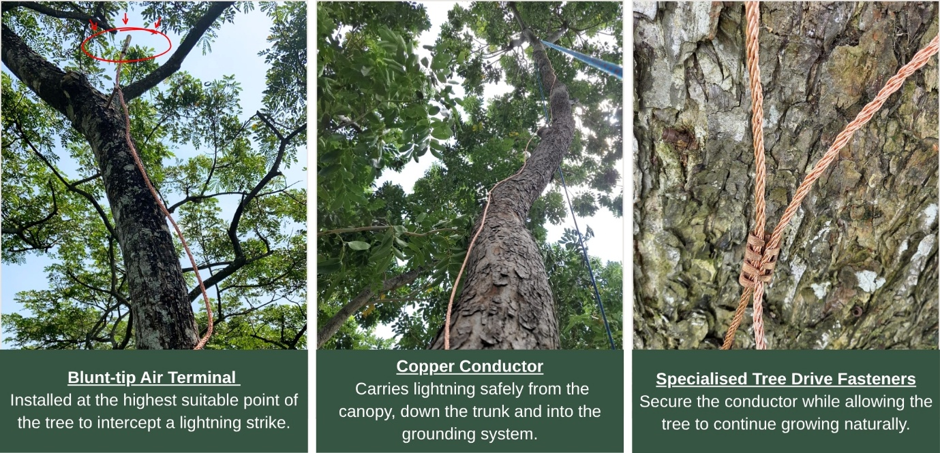
A blunt-tip air terminal is positioned at the highest suitable point within the canopy to intercept a strike, providing an approximate protection radius of 11 metres.
A durable 14-strand AWG 17 smooth-twist copper conductor runs discreetly down the tree, secured using specialised tree drive fasteners that accommodate natural growth while minimising injury to living tissues.
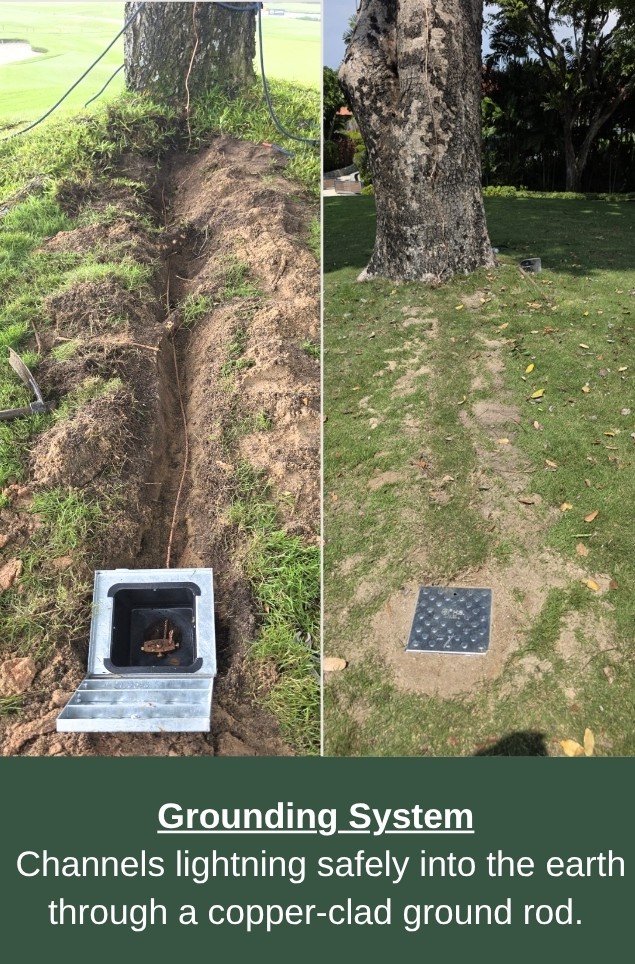
Side-by-side splicers maintain uninterrupted electrical continuity before the conductor connects to a 5/8-inch by 1.8-metre copper-clad ground rod, allowing the electrical charge to dissipate safely into the earth.
The complete system is engineered to achieve an earth resistance below 30 ohms, ensuring lightning energy is dispersed efficiently and safely. Together, these carefully engineered components create a continuous pathway that directs lightning harmlessly into the ground rather than through the tree itself.
Quiet Stewardship
Installing a Lightning Protection System is only the beginning.
The systems are inspected annually from ground level, with more comprehensive inspections carried out approximately every 18 months and after major pruning works. During these inspections, the Agronomy Team checks the integrity of the conductors, monitors the fasteners as the trees continue to grow and ensures the air terminals remain above the developing canopy so the systems continue to perform as designed.
This ongoing programme reflects the Club’s long-term commitment to responsible arboriculture management, ensuring each system continues to protect the trees throughout their lifespan.
For most golfers, a memorable round is defined by the quality of the greens, the challenge of the holes and the beauty of the landscape. Few will ever notice the Lightning Protection Systems discreetly installed among the branches above them, nor should they.
Their quiet presence is a reminder that the finest course management often goes unseen, guided by careful planning, sound science and a long-term commitment to both nature and people. By investing in the protection of its strategically important trees, TMCC is preserving the character of its championship courses while helping to ensure they remain safe, enjoyable and enduring for generations to come.